
SolScan
多功能3D結構光掃描器
工業自動化硬體
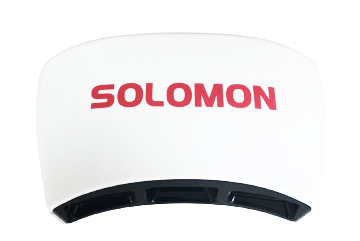
SolScan 產品描述
使用 SolScan 可開啟廣泛的應用可能性,包括物體識別和分類、精確測量、料箱內取放、機器人引導、精確物體掃描,以及用於虛擬現實和擴增實境的 3D 建模。
SolScan 與其他工業 3D 相機的不同之處在於其卓越的性能和多樣的定制選項。使用者可以根據特定需求量身定制 3D 應用,使 SolScan 成為系統集成商、設備製造商和終端用戶的理想選擇。
SolScan 特色
快速掃描
彩色功能
整合機器人作業系統(ROS)
雙相機
簡易操作介面
GenIcam 3D介面
SolScan 應用
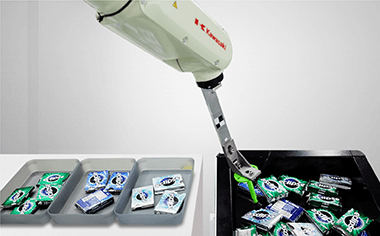
物件辨識和分類
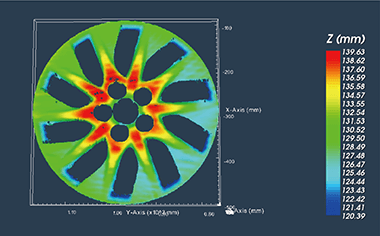
尺寸量測
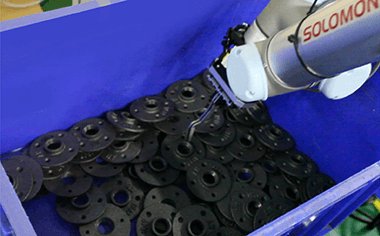
三維物件取放
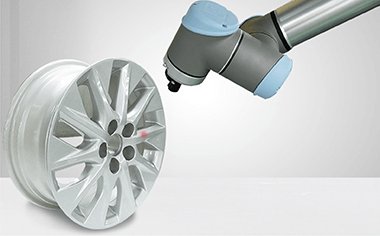
機器人自動路徑導引
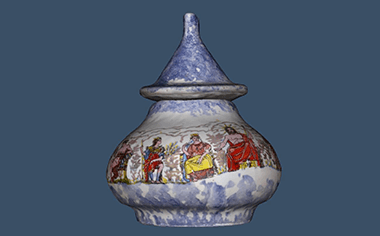
3D物件掃描
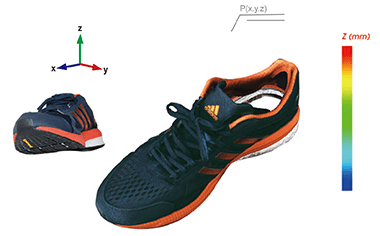
VR/AR 3D
SolScan 影片
物體掃描和測量
3D建模
料箱內隨機取放
FAQ
Common Questions About SolScan
Answers about 3D vision, object recognition, robotic applications, and system integration.
What Should System Integrators Look for in a 3D Vision Camera for Robotic Picking?
System integrators should evaluate an Industrial 3D Camera based on its ability to capture challenging objects, recognize different parts, and provide accurate 3D positioning data. Important considerations include imaging performance, AI capabilities, integration requirements, and adaptability to new products. SolScan combines 3D imaging with AI-powered recognition and pose estimation, providing the vision information developers need to build their own Robot Guidance System.
Can 3D Vision Cameras Recognize Transparent, Reflective, and Dark Objects?
Yes, although performance depends on the material, surface characteristics, and operating conditions. SolScan combines 3D imaging with AI recognition to support objects that conventional vision systems can struggle to detect, including textured transparent materials, reflective metal, and dark surfaces. These capabilities can support applications such as Transparent Object Bin Picking and Reflective Metal Bin Picking, subject to evaluation with representative objects.
How Can System Integrators Recognize New Parts Without CAD Models?
SolScan uses one-shot and few-shot learning to recognize new objects from one or a few reference images, reducing the need for large training datasets. Its CAD-free 6D pose estimation also helps determine an object’s position and orientation without requiring a CAD model. These capabilities allow integrators to introduce new parts more efficiently, although training requirements and positioning accuracy depend on the application.
How Can Robots Automatically Pick Randomly Stacked or Overlapping Parts?
3D Bin Picking applications use 3D vision to identify individual objects and determine their positions and orientations, even when parts are randomly arranged or closely packed. SolScan provides object recognition, instance segmentation, and 6D pose estimation to help locate individual items. System integrators use this information with separate grasp planning, motion control, and robotic equipment to perform automated picking.
How Can Robots Automate Picking and Handling of Different Parts?
Vision Guided Robotics enables automated systems to identify and locate different parts without requiring every object to arrive in a fixed position. SolScan uses AI-based 3D Object Recognition and rapid learning to support changing product mixes, allowing new items to be introduced with limited reference images. Integrators use its vision outputs to develop the robotic handling, grasping, and placement operations required for their applications.