Precision Machined Component Defect Detection Using AI
The Case
Quality Control for Precision Machined Components
Precision machined components require strict control of surface condition and dimensional integrity to ensure reliable performance in downstream assembly and operation. Surface defects such as scratches, tool marks, and impact damage can directly affect fit, function, and product quality.
Increasing production variability and inspection demand make it difficult to maintain consistent quality using manual inspection alone. Manufacturers require a more stable and scalable approach to precision machined component defect detection.
The Challenge
Detecting Surface Defects on Complex Machined Components
Precision machined components often include curved or spiral geometries that produce inconsistent reflections and surface appearances during inspection. These variations make it difficult to reliably identify surface defects under standard lighting conditions.
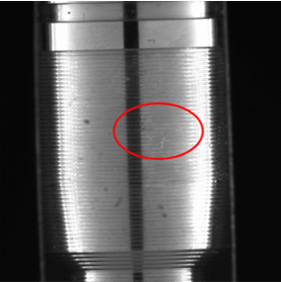
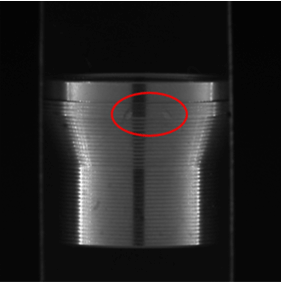
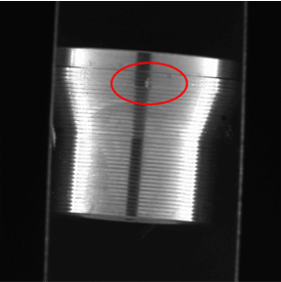
During machining and handling, components may develop scratches, tool marks, collision damage, or localized surface irregularities. These defects are often low contrast and do not follow consistent patterns.
Traditional rule-based inspection systems struggle to differentiate true defects from normal surface texture variation, leading to unstable inspection performance in production environments.
The Solution
SolVision AI Defect Detection for Precision Machined Components
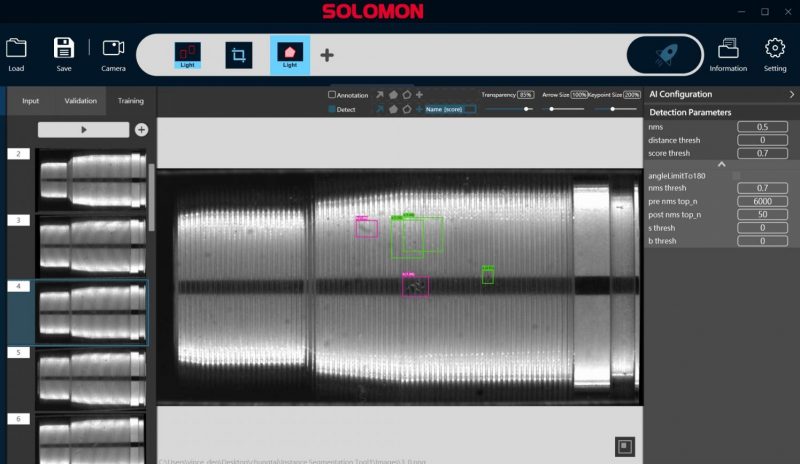
SolVision applies deep learning-based AI vision inspection to identify surface defects on precision machined components under variable imaging conditions.
The vision system is trained using labeled examples of machining-related defects, including scratches, tool marks, and surface damage. Through segmentation-based learning, the AI model distinguishes defects from complex surface patterns, enabling reliable detection under varying lighting and part orientation.
The AI system detects:
- Surface scratches and abrasions
- Machining tool marks
- Impact damage and surface irregularities
SolVision enables precise defect localization, including position and size, improving traceability and inspection consistency. Continuous model refinement enhances detection robustness across production variations.
Precision Machined Component Defect Classification