

Pharmaceutical Blister Pack Inspection Using AI Vision
Case Overview
Industry: Pharmaceuticals and Medical
Solution: SolVision
High-speed pharmaceutical packaging lines require reliable inspection to identify missing or defective tablets and capsules. SolVision uses AI-based machine vision to detect and classify filling errors during blister pack inspection.
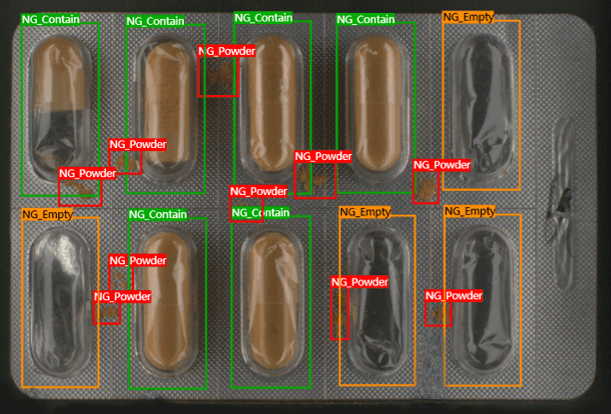
The Case
Inspecting Pharmaceutical Blister Packaging
Pharmaceutical blister packaging, also known as push-through packaging (PTP), protects tablets and capsules from moisture while providing convenient individual doses. These packages typically consist of transparent PVC, aluminum foil backing, and PVDC barrier layers to reduce moisture permeability.
High-speed PTP production lines process thousands of tablets or capsules per hour, requiring consistent inspection of individual blister cavities. Occasional filling errors, including empty cavities and defective tablets or capsules, can compromise packaging quality. Reliable inspection is essential to identifying these defects before products proceed through subsequent production stages.
The Challenge
Detecting Filling Errors in Reflective Blister Packaging
Traditional blister pack inspection uses manual checks or conventional machine vision systems to verify tablet and capsule presence and identify filling defects. However, reflections from transparent PVC surfaces can interfere with visual inspection, making it difficult to distinguish acceptable products from defects.
High production speeds further complicate inspection, as systems must identify missing or defective tablets and capsules across thousands of individual blister cavities. These conditions can limit the effectiveness of traditional inspection methods and contribute to higher defective product rates.
The Solution
AI-Powered Pharmaceutical Blister Pack Inspection with SolVision
SolVision uses deep learning and machine vision to automate blister pack quality inspection. The system is trained using images of acceptable PTP samples and various defects, enabling it to identify and classify filling errors.
SolVision’s Segmentation tool identifies individual blister cavities and their contents. The trained AI model detects and classifies filling defects, including missing or defective tablets and capsules.
Application: Automated Tablet and Capsule Presence/Absence Inspection
SolVision performs automated presence/absence inspection by identifying individual blister cavities and verifying their contents. The system detects empty cavities and classifies visible tablet or capsule defects, helping operators identify nonconforming products during packaging inspection.