
Food Quality Inspection Using AR and AI
Case Overview
Industry: Food and Beverage
Solution: META-aivi
An Asia-based frozen food manufacturer supplying ready meals to national and international supermarket chains required a more effective approach to food quality inspection. META-aivi combines AI-based visual inspection with augmented reality to help production line workers identify foreign objects in food ingredients during processing.
The Case
Supporting Ingredient Inspection During Production
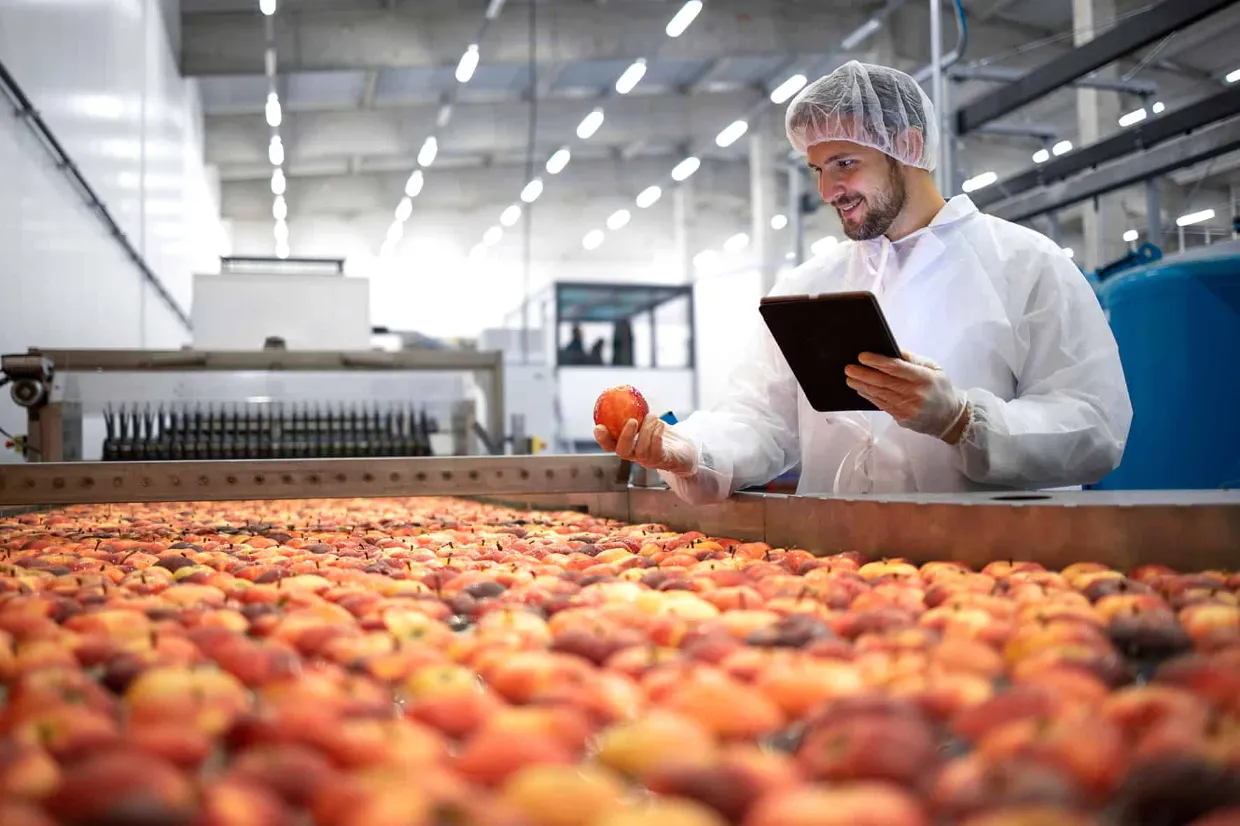
Production line workers inspect ingredients for foreign objects before the ingredients move further into frozen food processing.
The inspection process was traditionally performed manually. Extended working hours could cause worker fatigue, increasing the risk of errors and missed foreign objects during inspection.
The manufacturer needed a method for detecting foreign objects during production without delaying the line.
The Challenge
Detecting Foreign Objects Across Different Food Ingredients
Foreign objects varied in size and type, making them difficult to identify consistently through unaided manual visual inspection.
The inspection process also needed to remain thorough while supporting the pace of food production. Workers had to identify impurities before ingredients entered further processing without creating unnecessary production delays.
The Solution
Food Quality Inspection with META-aivi
META-aivi uses artificial intelligence and augmented reality to support real-time foreign object detection during food production.
Customized AI models identify different types of foreign objects across different food ingredients. The system is deployed through AR glasses and IP cameras, allowing production line workers to perform inspections during the existing production workflow.
Inspection results are provided to workers in real time, supporting foreign object detection during ingredient processing.
Foreign Object Detection
META-aivi analyzes visual input from AR glasses and IP cameras to identify foreign objects in food ingredients.
Customized AI models enable the system to detect variations in the size and type of impurities encountered during production. Workers can use the inspection results in real time while food continues through the production process.